In September 2023, the Restena Foundation embarked on a major European project to improve protection against the cybersecurity risks faced by the Luxembourg research and education community with the goal, in particular, of setting up a dedicated security event management platform. This project known as LuCySe4RE - « Enhancing Cybersecurity Services for the Luxembourgish Research and Education community », is tackling it head-on thanks to funding received from the European Union’s Digital Europe programme (DIGITAL) and thanks to the involvement of several organizations representing the research and education community : Luxembourg Institute of Health (LIH), Lycée Guillaume Kroll and its BTS Cybersecurity section, University of Luxembourg, Luxembourg Institute of Socio-Economic Research (LISER) and Centre de gestion informatique de l'éducation (CGIE).
Thirty-six months after the LuCySe4RE was launched, not only did the project team led by Isidore Moreno, Network and Systems Engineer at Restena and LuCySe4RE project manager, address the challenges posed by the project, but above all, it made them grow within Restena’s regular activities.
Two tailor-made services to be implemented by IT teams
The innovative solutions implemented during the project have been fully integrated within Restena’s portfolio of services. Research and education institutions in Luxembourg can make use to the ‘DNS firewall’ and ‘Security Information and Event Management (SIEM)’ services. Thanks to them, they can, respectively, protect their IT network from IT threats caused by the individual activities of their users and analyse the security alerts generated by the components of their information system.
In addition to these services, which were provided at no extra cost, the project has also promoted the use of open-source tools. The project team did indeed draw on this technology to bring to life the technical developments required to successfully realise its ambitions. Their work and its results reinforce the value and relevance of using such tools to ensure services that are secure, controlled and tailored to the needs of research and education. Future developments within the ecosystem in which all the project’s developments have been carried out will, moreover, continue not only in line with needs and technological innovations but, above all, through continued investment in open source.
From assessment to raising awareness of risks
The levels of security and preparedness within the research and education sector in Luxembourg were also assessed at the start of the project. On this occasion, a great diversity of practices, knowledge, budgets and allocated staff between research and education institutions were highlighted, and compliance with the European directives on Critical Entities’ Resilience (CER) and the Network and Information Systems Security Act 2 (NIS 2) emerged, amongst other things, as a common denominator. The developments undertaken throughout the project naturally complied with these two crucial directives and, at the same time, enabled Restena’s practices to be aligned and improved.
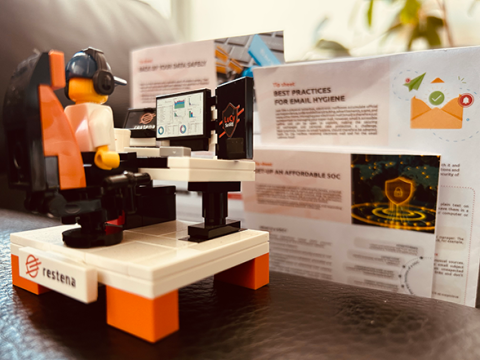
Raising awareness about cybersecurity, threats and opportunities among researchers, professors, administrative staff and student was also a key focus throughout the project. Several events aimed at raising awareness and promoting best practice – including the annual CyberDay.lu and Data Privacy Day events – as well as tip sheets on data backup, best practices for email hygiene and how to set-up of an affordable Security Operations Centre (SOC) were made available to them. All these initiatives now reinforce the activities carried out by Restena as part of its ‘awareness-raising’ service that intends to raise awareness and develop stakeholders' knowledge in education, research, and culture concerning issues related to computer security.
Inspiring results beyond Restena
The work undertaken by Restena’s teams throughout the LuCySe4RE project will be sustained within its Computer Security Incident Response Team (CSIRT)—but not only there. It is inspiring other cybersecurity stakeholders, even beyond Luxembourg’s borders.
The infrastructure developed as part of the project was used in 2026 by the Luxembourg Armed Forces during its annual cyberdefense exercise, “Cyber Fortress,” and is expected to be used again in 2027. Delegations from a Swedish university and the organization operating Switzerland’s national research network also visited Restena to learn about the project and its achievements, seeking inspiration and potentially paving the way for future collaborations.